Ying Xu

I'm a software engineer at Pine59 in Oslo, building location intelligence that helps businesses understand how places and populations change. Before that, I did my PhD in deepfake detection at Colourlab, Norwegian University of Science and Technology (NTNU).

My research looked at how detectors generalize to unseen manipulations, whether they are fair across demographic groups, and whether benchmarks really measure what they claim to. I was advised by Kiran Raja, Marius Pedersen and Luisa Verdoliva.

Portrait of Ying Xu

Work

Software Engineer, Pine59

I build the data pipelines behind Pine59's mobility and location products. Most of my work turns aggregated, anonymized telco signals into products people can use: origin–destination matrices and traffic data, visitor and trade-area analytics on H3 hexagon grids, and the road, rail and transit map layers that tie them to real places. Pine59 grew out of Unacast's location insights business in 2026.
PhD Candidate, NTNU Colourlab

Researched deepfake detection that holds up outside the lab: models that generalize to unseen manipulation methods, explain their decisions, and treat demographic groups fairly. Thesis: Generalising Deepfake Detection Towards Robust, Interpretable and Fair Models.

  1. Data science intern, Airthings Oslo
  2. M.Sc. Applied Computer Science, NTNU Gjøvik
  3. Software engineer, KOSTAL Shanghai

Selected publications

IEEE T-TS 2024

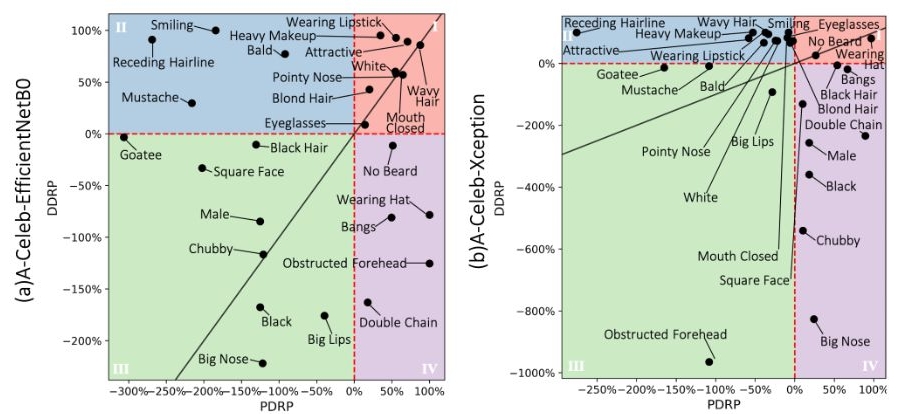
Analyzing Fairness in Deepfake Detection With Massively Annotated Databases

Ying Xu*, Philipp Terhörst*, Marius Pedersen, Kiran Raja

We annotated five popular deepfake datasets with 41 demographic and non-demographic attributes, about 65 million labels in total, and used them to measure bias in state-of-the-art detectors.

WACVW 2022

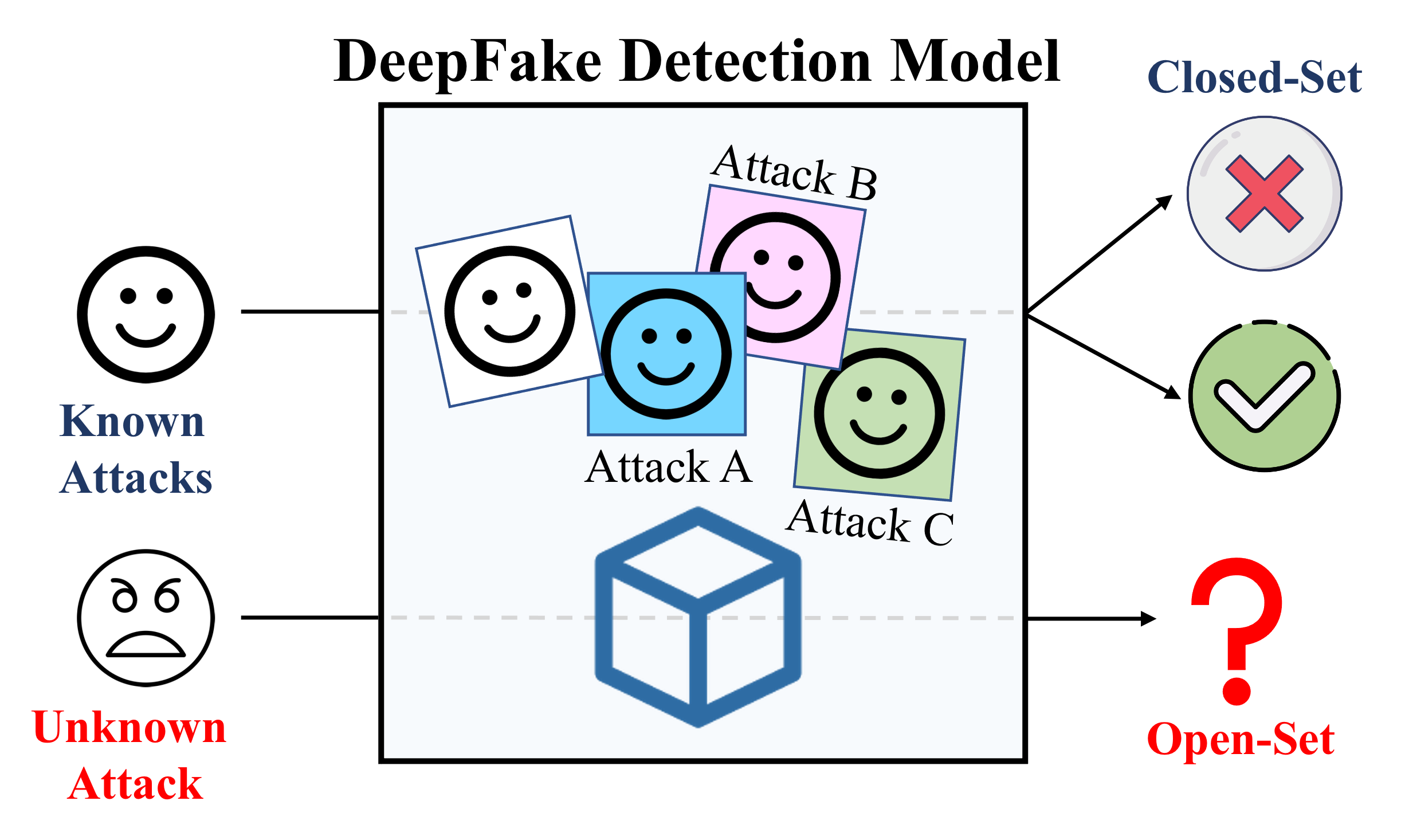
Supervised Contrastive Learning for Generalizable and Explainable DeepFakes Detection

Ying Xu, Kiran Raja, Marius Pedersen

A detector trained with a supervised contrastive loss to catch unseen manipulations. Fusing it with Xception reaches 83.99% accuracy in a true open-set setting.

WACVW 2023

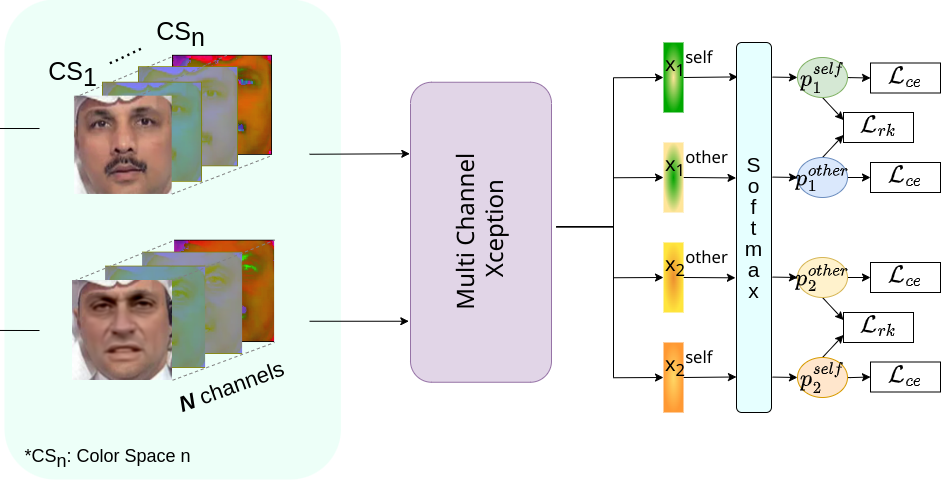
Learning Pairwise Interaction for Generalizable DeepFake Detection

Ying Xu, Kiran Raja, Luisa Verdoliva, Marius Pedersen

MCX-API combines multiple color spaces with attentive pairwise interaction, reaching 98.48% balanced open-set accuracy on FF++ and 90.87% on Celeb-DF.

Also

All publications on Google Scholar